
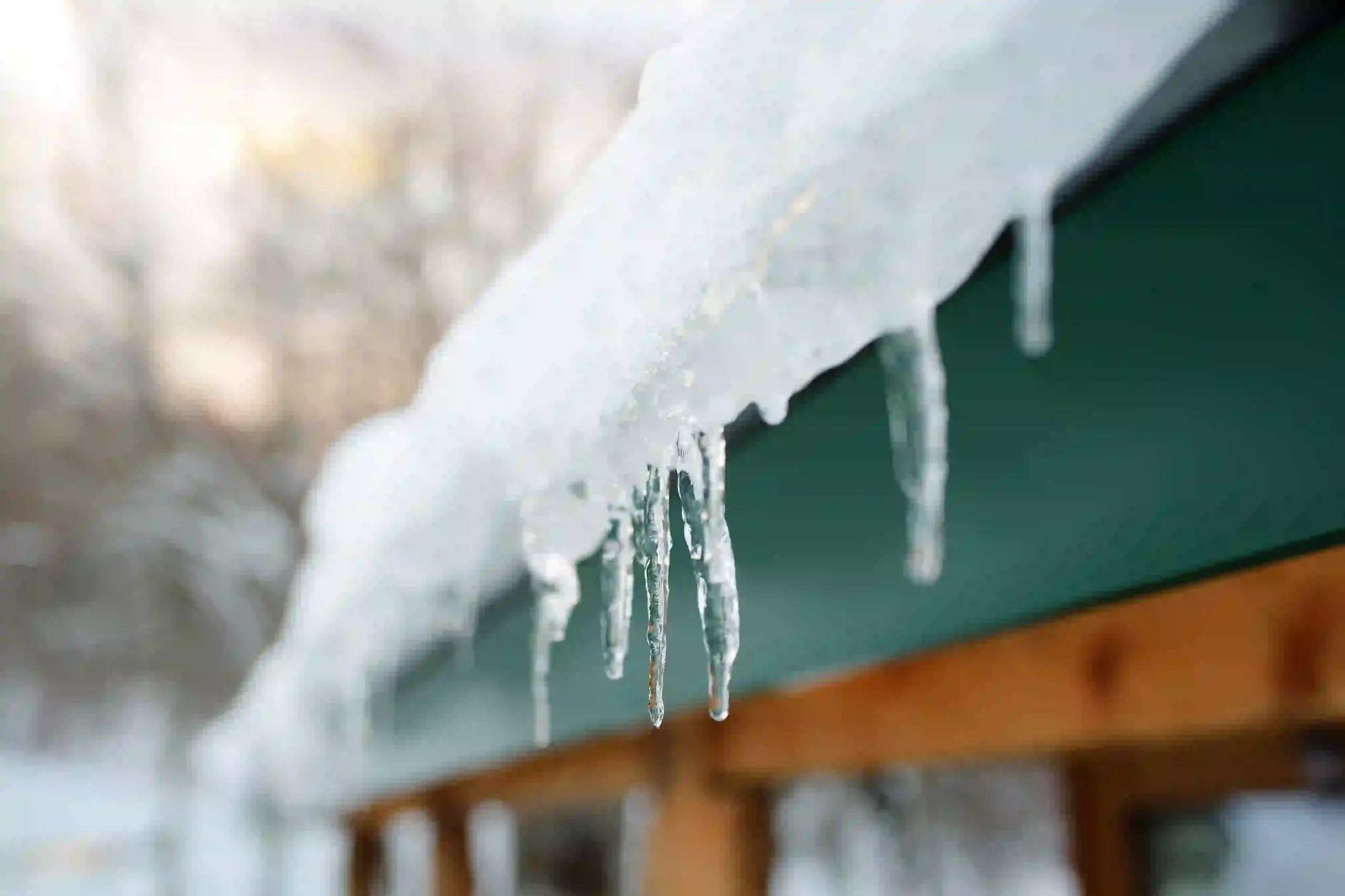
Ice dam forming at the eave of a NJ home in winter
The cause is almost always the same: inadequate attic ventilation allowing heat to escape from the living space, warm the roof deck above freezing, and create the melt water that runs to the cold eave overhang and refreezes. In New Jersey's inland counties — Somerset, Hunterdon, Morris, and western Middlesex — where 30–40 inches of annual snowfall is standard, ice dams cost homeowners thousands of dollars in ceiling and interior damage every heavy winter.
01What Creates an Ice Dam — The Exact Sequence
Ice dam formation follows a specific sequence that begins inside the home, not outside. Heat from the living space rises through ceiling penetrations — recessed lights, plumbing stacks, attic hatches — into the attic space. If the attic is poorly ventilated, this heat accumulates against the underside of the roof deck, warming the deck above 32°F even when outdoor temperatures are well below freezing.
Snow on the warmed deck melts and flows toward the eave overhang — the section of roof that extends beyond the exterior wall and has no heated space below it. At the cold overhang, the melt water refreezes, building the ice ridge that becomes the dam. Subsequent melt water has nowhere to drain and backs up under the shingles, entering the home through the shingle laps. The leak appears on the ceiling of the top floor, often near an exterior wall — nowhere near the actual entry point at the shingle lap.
02Why Heated Cables Don't Solve the Problem
Heated cables address ice dam symptoms by creating a drainage channel through the ice ridge, allowing melt water to escape before it backs up under the shingles. They work — when they are installed correctly, kept clear of debris, and plugged in at the right time. The problem is that they do nothing about the heat escaping from the living space that created the ice dam in the first place.
Remove the cables and the ice dam forms again the next winter. Heated cables also create ongoing electricity costs, require annual installation and removal on most NJ installations, and can be damaged by ice loading if not correctly positioned. They are a management tool for ice dams that cannot be prevented — not a solution for ice dams that result from correctable ventilation deficiency.
03The Permanent Solution: Balanced Attic Ventilation
The permanent fix for recurrent ice dams on New Jersey roofs is balanced attic ventilation — ridge vents, soffit vents, and rafter bay baffles that maintain the roof deck at or near ambient temperature throughout the winter. When the entire roof deck stays cold, snow stays frozen rather than melting at the deck surface. No melt water, no ice dam.
The ventilation system accomplishes this by drawing cold ambient air from the soffit and exhausting accumulated heat from the ridge continuously — preventing the heat buildup that creates differential melting. The ventilation correction is permanent: once installed and balanced correctly, the same system that prevents ice dams in winter also removes heat from the attic in summer, extending shingle life and reducing cooling costs. For NJ homeowners who correct the ventilation deficiency, the following winter is typically ice dam free. See our attic ventilation services in New Jersey.
Balanced ridge and soffit ventilation — the permanent ice dam solution
04What to Do Right Now If You Have an Active Ice Dam
If you have an active ice dam creating water entry into your home, there are a few immediate steps that limit additional damage while you schedule permanent repair. Do not chip the ice off the roof with tools — ice dam removal with a chisel or hammer creates shingle damage that costs more to repair than the ice dam itself.
Safely using a roof rake to remove snow from the lower 3–4 feet of the roof reduces the melt water supply to the dam. For water actively entering the home, place protective barriers under the drip area and document the damage — photographs of ceiling stains and interior water entry are useful for insurance claims. Call for an attic ventilation assessment as soon as conditions allow — the NJ building code standard for ventilation ratio is straightforward to verify, and most recurrent ice dam situations involve a correctable deficiency rather than a structural issue.
Stop Ice Dams on Your NJ Roof This Winter
Free attic ventilation assessment throughout New Jersey. We identify the deficiency and quote the permanent correction — same visit, no obligation.