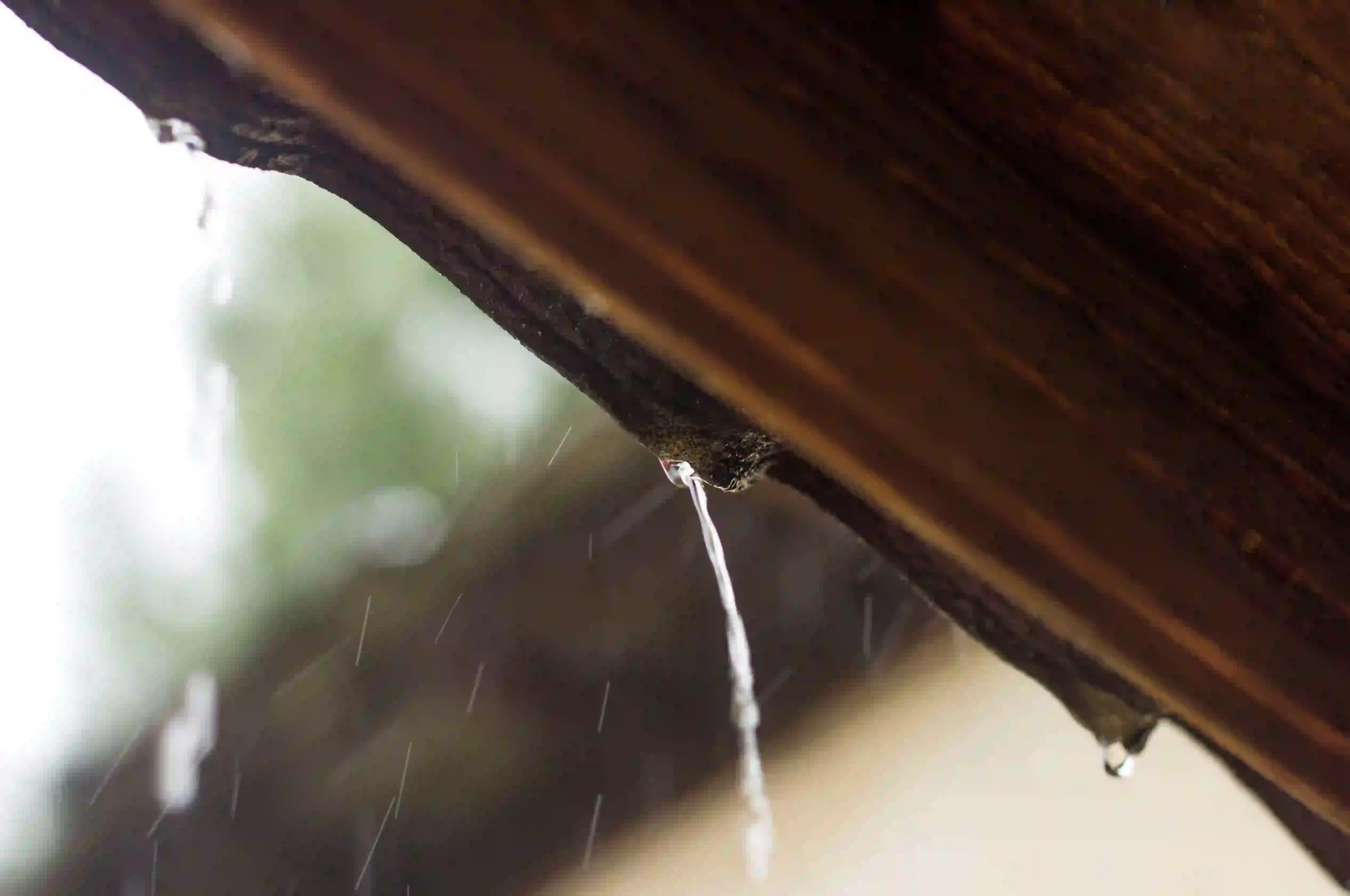
Water damage from a leaking roof — NJ home
In most cases, a roof leaking in New Jersey is caused by one of five specific conditions — and identifying the right one is the difference between a targeted repair and a costly replacement. US Roofing & Siding has diagnosed and repaired roofing leaks throughout New Jersey since 2015. Here's what we find most often.
01Failed or Missing Flashing
Flashing is the metal system — copper or aluminum — installed at every roof penetration and transition: chimneys, skylights, valleys, and roof-to-wall intersections. In New Jersey's freeze-thaw climate, flashing fails when roofing cement used as a substitute for proper metal systems cracks under repeated thermal cycling, when original metal corrodes through, or when wind lifts counter flashing from its mortar joint embedment.
Flashing failure accounts for the majority of specific-location roof leaks — water appears near the chimney, near a skylight, or at an interior corner. The correct repair is metal reflashing, not more roofing cement. Cement delays the same leak by 3–5 years before it recurs. If your leak traces back to a penetration point, see our chimney flashing repair in New Jersey for the permanent solution.
02Damaged or Missing Shingles
Shingle damage from Nor'easters, summer hail events, and falling branches is one of the most visible causes of a leaking roof in New Jersey — but also one of the most frequently underestimated. A single displaced shingle exposes the underlayment beneath to direct rain entry, and wind-driven NJ storms force water horizontally under adjacent shingles that remained in place.
Granule loss from aging shingles — visible as discoloration or bare spots — indicates that the asphalt coating is failing and water is no longer shedding. Hail impact creates bruised spots that accelerate granule loss at each impact site. Shingles that have lost adhesive seal integrity lift at the edges during wind events and allow water entry that the homeowner attributes to the storm rather than to the pre-existing adhesive failure.
03Clogged or Improperly Installed Gutters
Gutters are not technically part of the roofing system, but a failed gutter system causes roofing damage that presents exactly like a roof leak. When gutters are clogged, they fill with standing water that backs up under the shingle eave course — saturating the underlayment and creating ceiling stains that appear to come from the roof.
In New Jersey's winters, clogged gutters fill with ice that backs up further under the shingles and forces water into the wall cavity. Gutters mounted incorrectly — sloping toward the house rather than toward the downspout — concentrate water against the fascia rather than away from it. If your leak appears at the eave edge of the home rather than near a penetration, gutters are the first thing to assess.
04Inadequate Attic Ventilation Creating Ice Dams
Ice dams are one of the most misunderstood causes of roof leaks in New Jersey's inland counties — Somerset, Hunterdon, and Morris — where 30–40 inches of annual snowfall creates conditions that coastal homeowners rarely encounter. Ice dams form when heat escaping from the living space warms the roof deck above freezing, melting snow that runs to the cold eave overhang where it refreezes and builds a dam.
The leak appears inside the home — often far from where the actual entry point is — and it disappears when temperatures rise, leading homeowners to assume the roof is fine. Ice dams are a ventilation problem, not a shingle problem. Replacing shingles without correcting the ventilation produces the same ice dam cycle the following winter. For a permanent fix, see our attic ventilation services in NJ.
Failed chimney flashing — one of the most common leak points in NJ homes
05Aging Underlayment and Deck Failure
Roofing underlayment — the secondary waterproofing layer between the shingles and the roof deck — has a service life. On NJ roofs approaching or past 20 years, underlayment that has dried and cracked allows water penetration even where the shingles above are still intact. Deck failure from accumulated moisture — soft spots, delamination of the plywood layers, or rot in board-sheathed older homes — creates entry points that no shingle repair addresses.
These conditions are not visible from the ground or from a basic surface inspection. A thorough assessment by a licensed roofing contractor in New Jersey that includes attic inspection identifies deck and underlayment conditions that explain leaks without obvious surface damage. If your roof is over 18 years old and leaking without visible shingle damage, this is the most likely cause.
Stop Your NJ Roof Leak Before It Gets Worse
We respond throughout New Jersey within 24 hours. Free inspection, written diagnosis, no obligation. Every month a leak continues, the damage grows.