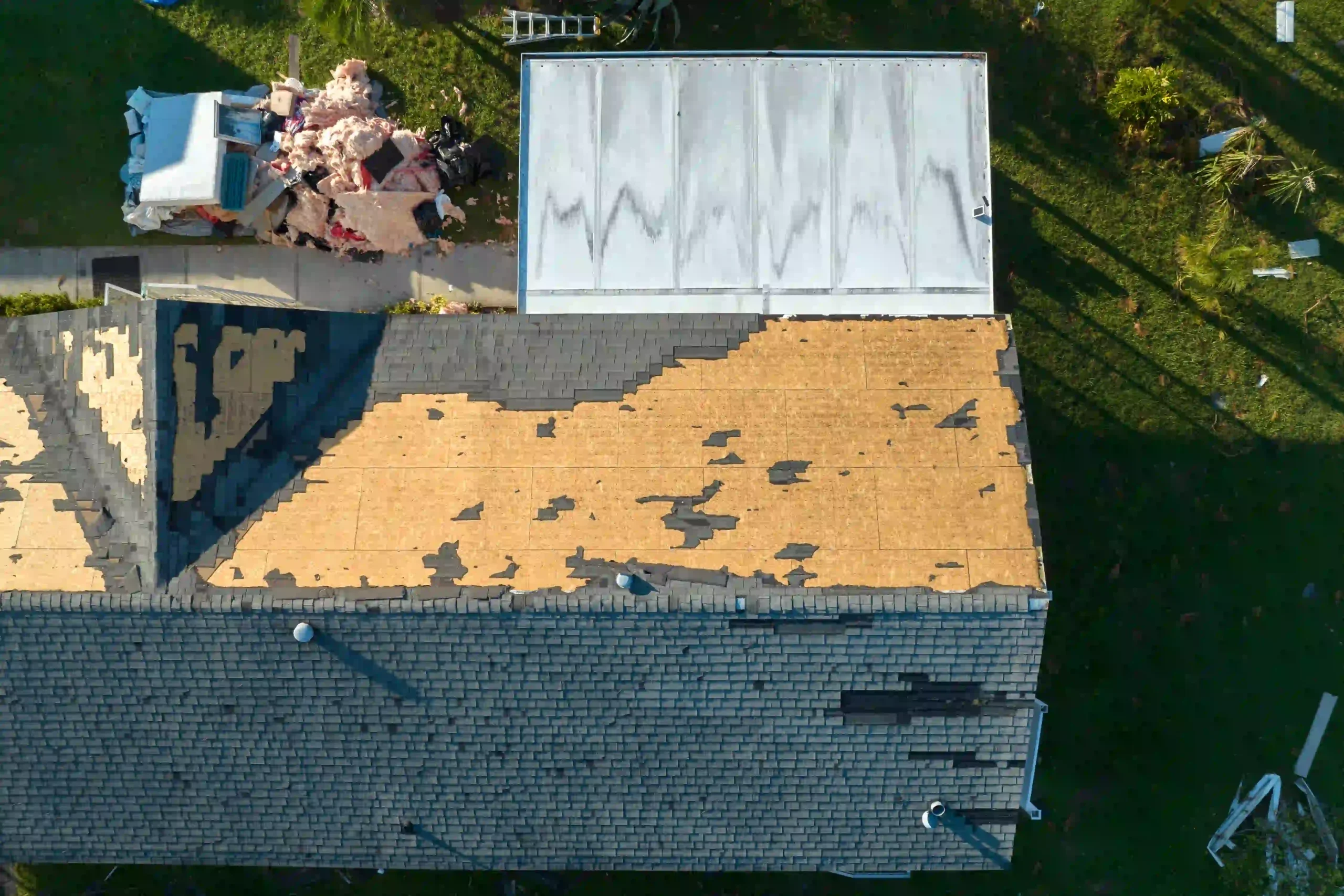
Storm-damaged NJ roof — knowing lifespan helps avoid costly surprises
A well-installed roof in inland NJ can outlast the same material on a coastal Monmouth County property by 5–10 years. Here's what the major NJ roofing materials actually deliver under real New Jersey conditions — not manufacturer marketing claims.
| Material | Inland NJ | Coastal NJ | Key Factor |
|---|---|---|---|
| Asphalt Shingles | 25–30 yrs | 18–25 yrs | Ventilation adequacy |
| Metal (Standing Seam) | 40–70 yrs | 40–70 yrs | Aluminum vs Galvalume coastal |
| TPO Flat Roof | 20–30 yrs | 18–25 yrs | Seam quality & hardware |
| Cedar Shake | 30–40 yrs | 25–35 yrs | Maintenance discipline |
01Asphalt Shingles: 20–30 Years in NJ (With Conditions)
Architectural asphalt shingles — the dominant NJ roofing material — are rated for 30 years by most manufacturers, but this rating assumes ideal installation and ventilation conditions that many NJ homes do not provide. In practice, inland NJ installations on adequately ventilated attics achieve 25–30 years. Coastal NJ installations in Monmouth, Ocean, and Atlantic Counties — where salt air UV intensity is higher and temperature cycling more rapid — typically achieve 18–25 years on the same product.
The most significant factor shortening shingle life in NJ is inadequate attic ventilation: heat trapped in under-ventilated attics degrades shingles from below simultaneously with UV exposure from above, reducing effective service life by 5–10 years. GAF Timberline HDZ with the WindProven installation system is our standard NJ shingle specification — the product whose installation and warranty standards reflect actual NJ climate performance. See our full roofing contractor in New Jersey page for specification details.
02Metal Roofing: 40–70 Years in NJ
Standing seam metal roofing delivers 40–70 years of reliable service life in New Jersey — making it the only commonly available roofing material that can genuinely be the last roof a homeowner installs. Metal's longevity advantage over asphalt shingles is most pronounced in NJ's coastal counties, where salt air conditions that accelerate shingle aging have minimal impact on properly specified metal panels.
For NJ coastal properties, we specify aluminum standing seam panels rather than Galvalume steel — aluminum's inherent corrosion resistance eliminates the salt air degradation that limits Galvalume performance within a mile of tidal water. Metal roofing qualifies for insurance premium discounts with most NJ carriers when Class 3 or Class 4 impact ratings are specified — discounts that offset a meaningful portion of the material premium over a 10-year period.
03TPO Flat Roofing: 20–30 Years in NJ
TPO single-ply membrane roofing serves NJ's flat and low-slope applications — urban rowhouses in Hudson and Camden Counties, low-slope additions, and the flat-roof sections common on contemporary shore architecture. Properly installed 60-mil TPO with heat-welded seams delivers 20–30 years of reliable service life in NJ's climate.
The critical quality variable for NJ TPO is seam quality: heat-welded seams create a bond as strong as the membrane itself, while taped or adhesive-bonded seams fail within 10–15 years as NJ's temperature cycling stresses the mechanical connections. NJ coastal installations require TPO with enhanced UV resistance ratings and stainless steel termination hardware — standard products installed with standard hardware show premature failure near the Atlantic coast where UV intensity and salt air combine to degrade both the membrane and its fastening system.
Coastal NJ roofing — material specification determines actual lifespan
04Cedar Shake: 25–40 Years in NJ (With Maintenance)
Cedar shake roofing's service life in New Jersey depends entirely on maintenance discipline — specifically, the recoating and treatment schedule that preserves the wood's moisture resistance through NJ's seasonal cycles. Properly maintained cedar shake in inland NJ achieves 30–40 years. Shore-adjacent installations in Monmouth, Ocean, and Atlantic Counties require more intensive maintenance — 3–5 year recoating intervals rather than the 7–10 year inland standard — because salt air and higher UV intensity accelerate the surface degradation that allows moisture infiltration into the shake substrate.
Cedar shake installations that go 10+ years without treatment develop the cracking and cupping that leads to water entry and premature replacement. For NJ homeowners committed to cedar shake, the material investment makes financial sense only with the maintenance commitment that delivers the full service life.
Get an Honest Roof Assessment in New Jersey
We tell you what your roof actually needs — repair or replacement. Free written assessment throughout NJ. No pressure, no obligation.